
I’ve been to quite a few conferences this year. It might be a personal record. It got me thinking about the different formats and what works or not for me.
The variations
There are few things you can look at when assessing if a conference will be interesting for you or not.
- number of days: from one, two to three days
- single track of multiple tracks – this means you can have different tracks where you pick which session you prefer to go to
- type of audience: who is the target audience? will I fit in and is the content for me?
- type of sessions
- participation of the attendees
- what is shared – takeaways after the conference is over
- practicalities: accessibility of the venue and the sessions, food provided or not, and the price
Access:Given
This is a one-day digital accessibility conference, in person, it’s single track so you don’t have to pick your sessions, you can see them all. Visit the website of Access:Given.
The target audience is more for people who are new to accessibility, but if you know a lot already, it’s always nice to spend a day with like-minded people.
There was a variety of sessions, some longer than others, one was a panel, the rest were talks with one of 2 speakers.
You can ask questions at the end of the sessions, and all the talks are recorded and shared publicly shortly after the event on a YouTube channel . Most speakers shared their slides as well. There is also a slack space you can join to continue the conversation.
The venue is accessible, there are live captions on the day. Food was only provided if you had booked your ticket early. The price for one day is very reasonable.
One of my favourites
I had a great time, the room was really comfy for me, there was a small number of participants, it was just right, not too overwhelming. A lot of care is put into making sure people’s needs are considered.
I wrote a blog post about it: Access:Given a one-day accessibility conference
UX Scotland
It’s a 2-day conference, in person about design. Multiple tracks, so you need to check the programme and pick your sessions. There is a variety of formats, some talks, workshops, or discussions, some short sessions and longer ones, with 3 keynotes.
It’s for designers. If you’re a lead designer, there might be less for you to learn, but if you pick workshops or discussions over talks, you might get new things from it. People are usually very relaxed and friendly.
You can ask questions at the end of most talks, and can be more active in workshops for example.
Since it started, I feel less and less people share their slides, or reflections on social media and this year, there was no recordings or photos shared. So unless you took a lot of notes during the event, there isn’t much left once it’s over.
The price has gone up over the years. If you add the travel and one night in a hotel minimum, it’s quite a budget to plan. It will be cheaper if you get your ticket early, at a point where you won’t know what the programme will be. Food is included and nice with a good choice.
I shared about this year’s session: UX Scotland 2026. I delivered a session, an shared the slides in various formats – Practical steps toward a more inclusive practice.
GOV Camp Scotland
This is one day, in person, multiple tracks so you need to pick your sessions. It’s for people working across the public, local government and third sectors. This is free, food was provided for lunch as well as tea or coffee. As it is a participant-led unconference, you are expected to participate. You can pitch a session, or participate during discussions but you can also simply listen if you prefer. There is a note taker during the sessions so you get access to the notes after the event, whether you attended or not.
The unconference format
An ‘unconference’ is an event that is entirely participant-led:
- attendees collaboratively create the agenda
- lead the sessions
- shape the discussions around the topic in each session
Compared to a ‘normal’ conference, you don’t come to listen to ‘experts’, you don’t even know who will be there and what will be discussed.
You come to meet new people, discuss and work with them to find how we can support each other, maybe solve a problem others have. Or you can come with your own question and pitch it to others. This will become a session where people will join with their area of interest or expertise.
The pitch
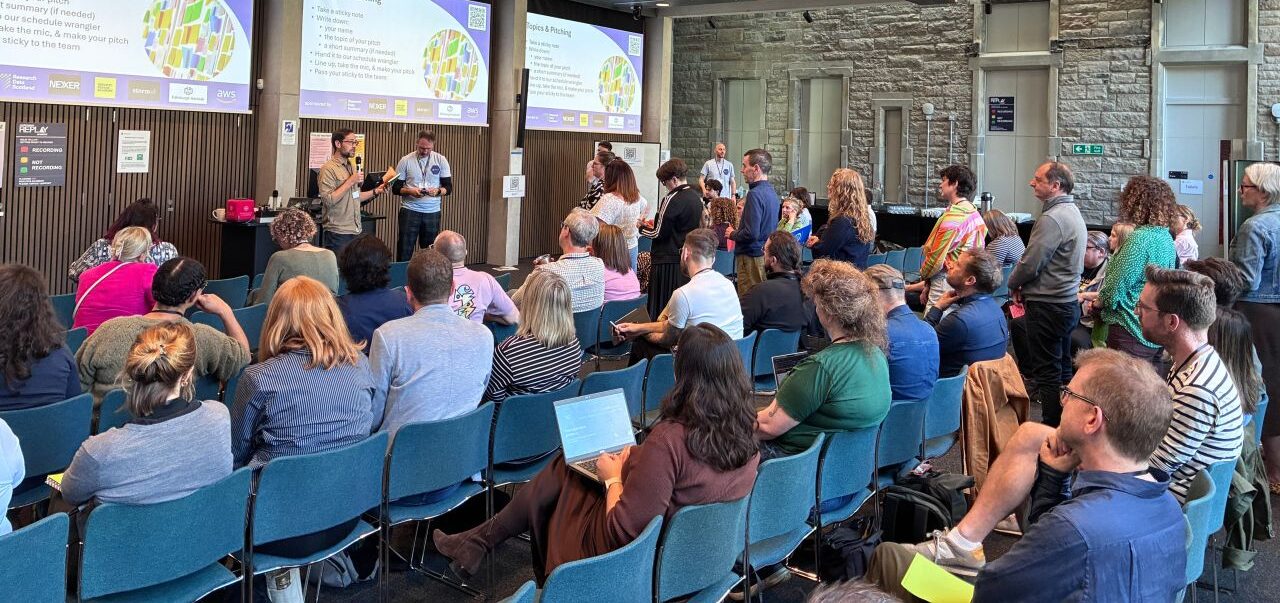
The pitching session happens at the start of the event. Anyone can suggest topics for the sessions that will run on the day.
People line-up. Do their short pitch (under 1 min) and add their sticky notes to the board.
The organisers then group them and organise the sessions accordingly, with 4 sessions to choose from each track.
The sessions
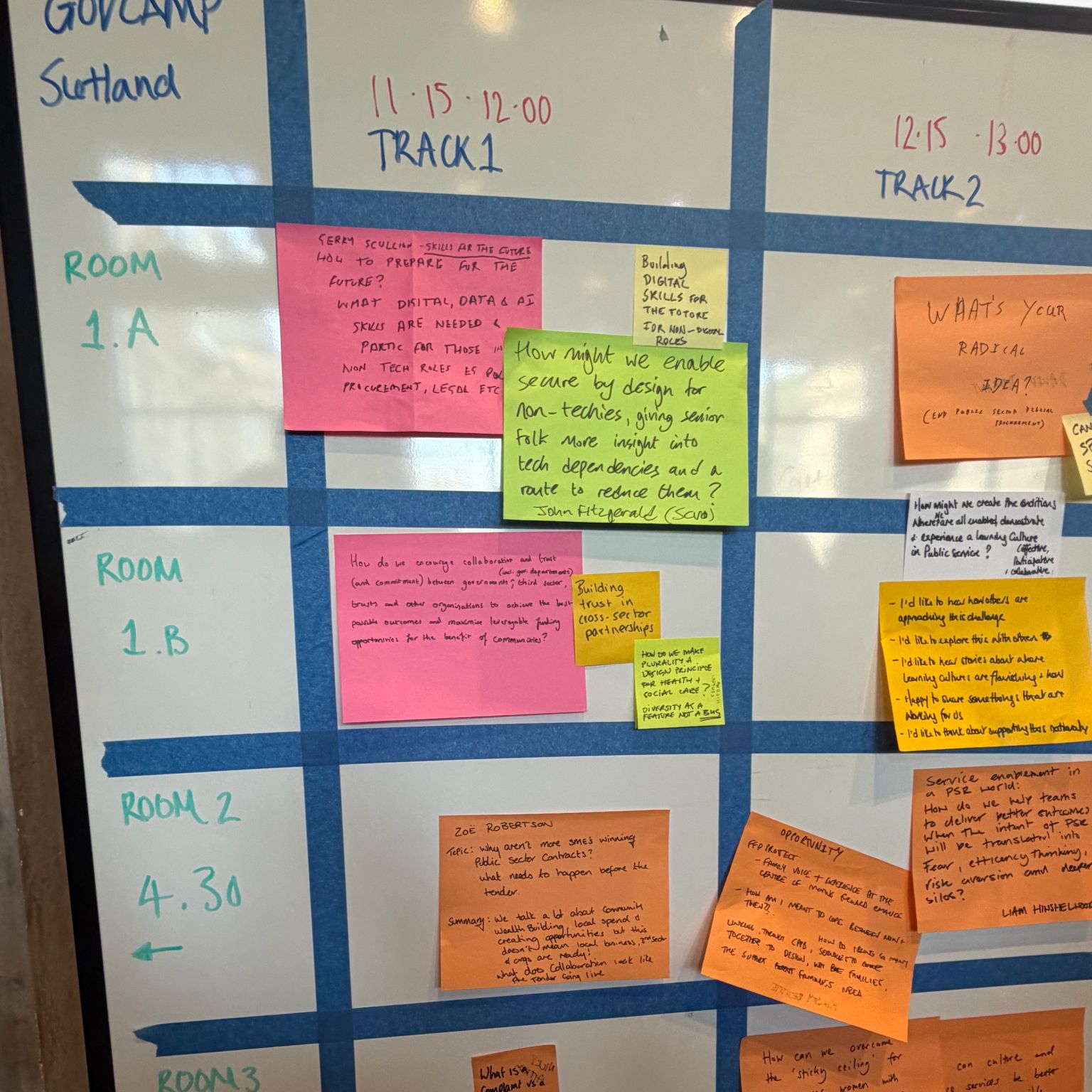
We ended up with a choice a 16 sessions in total. Four to chose from each time.
Each session runs for 45 min and has a:
- storyteller: the person or people who came up with the question / idea for the session
- firestarter: person hosting the session
- documentarian: person taking notes on behalf of everyone, the notes in the end are added to the google doc
My favourite session of the day
‘Radical ideas for public services’ was one of the sessions pitched. It was great. Anyone could voice their radical idea and then we could discuss as a group.
Stop relying on big tech and proprietary operating systems for our tools and software in government
This is something already started in France and other Europeans governments. You can read more about it: Open source as a means to digital sovereignty: France switches to GNU/Linux
The third place concept:
In sociology, a third place is a social space separated from your home – the first place – and your workplace – the second place.
The third one is a place where you meet with your community, like a library, the pub, the gym, a park or any place where you can meet people from your community, including online. Instead of having a choice to work from home or an office, you could also work from a ‘third place’, where you would meet with your community.
Meetings where you bring a question
This was part of a different session called ‘Fail camp – learning from failure’. To normalise asking for help when you’re stuck instead of hiding it, one of the attendees explained that they had a regular meeting where people would come with a question for the group and explain where they were stuck. The group would then try to help or connect the person with others who might be able to support them.
Unconferences are the best (for me)
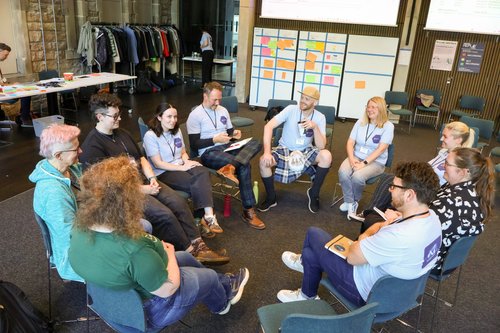
This is by far my favourite format and I’ve learned a lot that day. I might get to go to the UK GOV Camp in January in Manchester. Again it’s free, it’s a Saturday so no need to ask your employer or take a day off.
SDinGOV
There is a virtual event in March, just one day, and a 3-day in person event in September. This is aimed at designers working in government, but not only. Some product managers are coming as well as other roles.
Like for UX Scotland, it’s multiple tracks, so you need to check the programme and pick your sessions. There is a variety of formats, some talks, workshops, or discussions, some short sessions and longer ones, in person. There are 3 keynotes and an endnote.
Again, people are usually relaxed and friendly but compared to UX Scotland, it feels a bit more professional. You can ask questions at the end of most talks, and can be more active in workshops.
This year, more people shared their slides, and you can find them on this page.
For the in-person event, the session in the first track have live captions and were recorded but are not available yet. I think there wasn’t a photographer this year.
Like for UX Scotland, the price has gone up over the years. It is cheaper if you get your ticket early, at a point where you won’t know what the programme will be. Food is included and nice with a good choice.
My sessions
I presented online in March and it was recorded: How a service designer can contribute to accessibility on Vimeo.
In September, it was a workshop delivered as a trio with Charlie and Bahana. I’ve really enjoyed presenting and working with them on this.
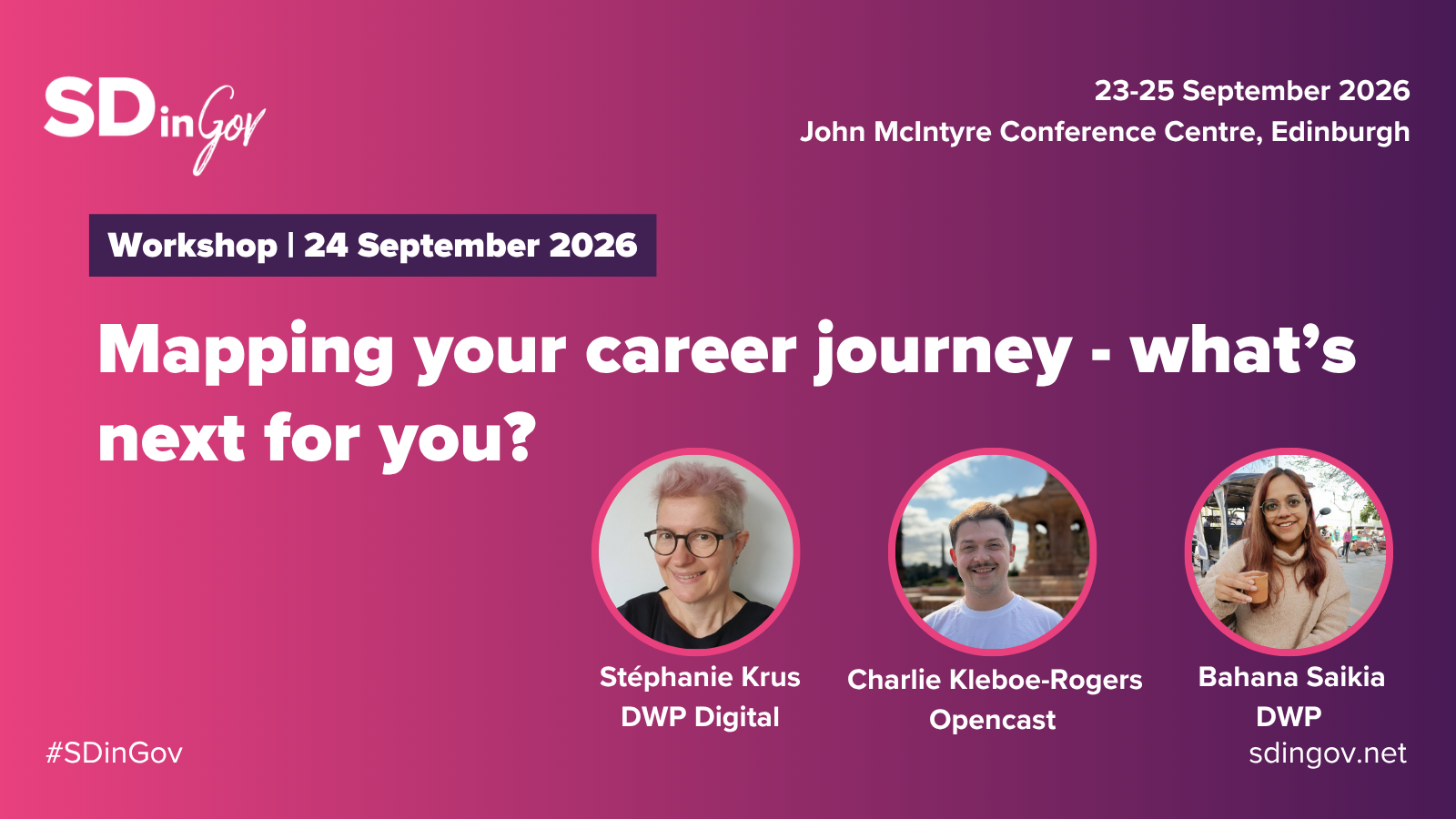
All the material is available and you can access a post as a Google doc with the insights of the day as well: Mapping your career journey, what’s next for you?
Leading Design
This is a 2-day conference, in person, single track. As the name of the conference is implying, this is for people leading design. I’m a senior not a lead, and felt I wasn’t really the audience for this. The speakers were giving advice for people to support the teams they are in charge of, and it was less about the users as a result.
Most of the talks were about 25min. All in the same room. As an attendee you are not expected to participate, but there are lunch discussions, where you can sit with one of the speakers and chat over lunch as a little group. I didn’t do that as I’d rather relax and speak with colleagues and friends at that point, but other attendees might enjoy getting time to speak with one of the speakers like that. At the end of each day, all the speakers come back like a panel and answer some questions they were provided from the audience.
All the sessions were recorded, and will be shared with attendees with a password I think. Previous ones are available on demand – I assume there is cost to this.
The food was really good but there were not a lot of choice, so you’d better like what’s on offer 😉
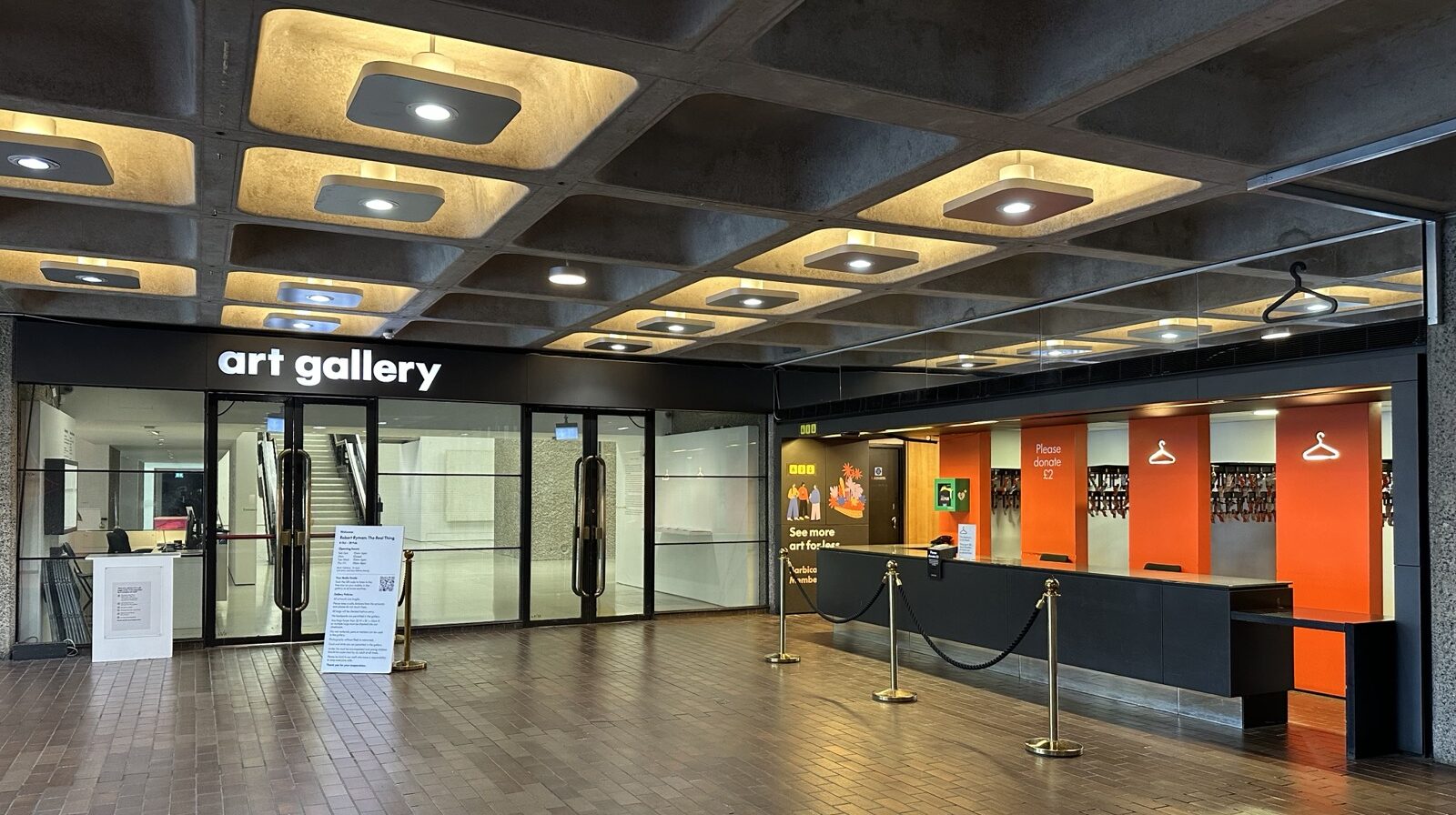
It is very expensive, which is probably because of the venue: it’s in the Barbican in London and you can get a tour at the end of the day which I was lucky to do. The guide was really good.

I didn’t get much from the talks though. There where really well delivered, the speakers were good at engaging the audience, but in the end, there wasn’t a lot for me to takeaway and way too many mention of AI without any acknowledgement of the potential for harm, and the impact on the planet.
I’ve still really enjoyed the time away from work, all the chats with my colleagues, as the breaks were long enough to allow plenty of time to chat.
Being a permanent
When I delivered a session, I didn’t have to pay for the conference. GovCamp Scotland was free, but I also didn’t have to take time off to attend as it was considered ‘personal development’. Access:Given and Leading Design were paid for me.
I really appreciate that as a permanent, it’s relatively easy to get access to training and conferences if you are part of a big department. Apart from conferences, I also got to present during Service Week in June, I was part of a panel about accessibility internally and presented some of my talks to UCD communities in various departments.
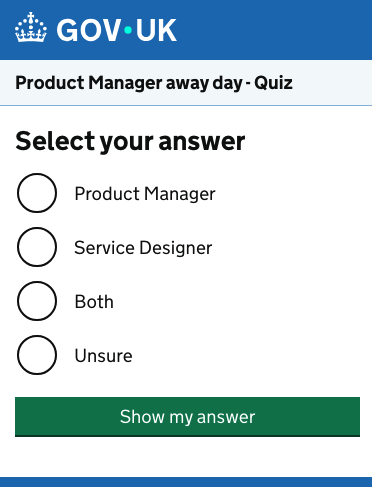
More recently, I was part of a group who presented Service Design during a Product Conference day internally. I really enjoyed this. We made a little quiz to get Product Managers to think about the differences between their roles and ours, and try to see how we can work better together. To help visualising answers in the room, I used the GOV.UK prototype kit to create a very simple app to display answer cards on a phone for the quiz. It made it engaging for participants and easy for us to see people’s answers. You can access the code for it on Github with explanations about how to do it. You can see how it works using this link and entering the password: ‘quiz’, when prompted – it will work better if you try it on a phone which was the intent for the day.
The year is not over, but conferences and speaking at various events is over for me for now. I’ve really enjoyed it. I might do less of it next year though 😉