Some insights and reflections from this year edition. I do not have a lot to share from the sessions this time, so I’m also reflecting about how I experience conferences these days.
Keynotes
I only saw the first 2 as I left too early to see the last one. Sara Wachter-Boettcher was really good, Most of the things she presented was not new to me but still a good reminder. I’ve been following her for a while and read her newsletter: Actice voice.
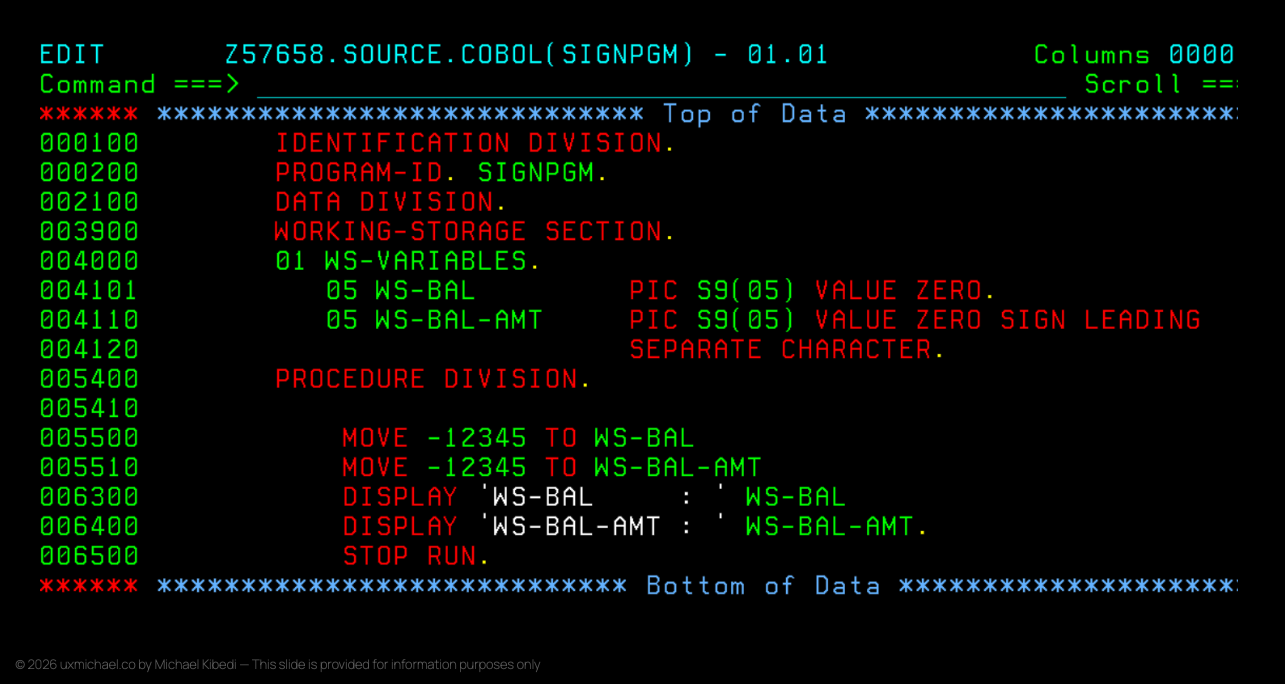
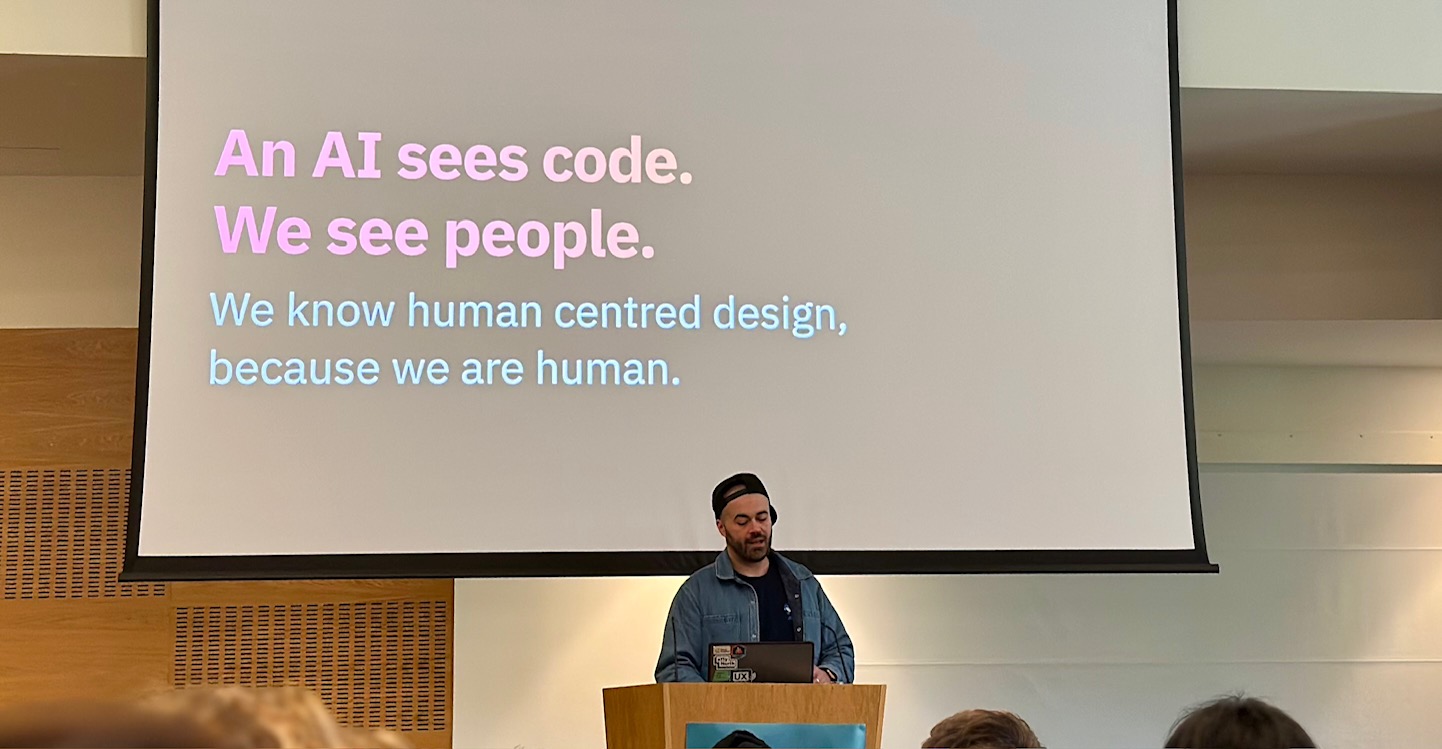
On the other hand, I didn’t know Michael Kibedi and really enjoyed his session. At the start, he said he was sharing his slides on this website uxmichael.co: you can download his presentation but it’s quite a big file nearly 30MB. He has a newsletter which I have now subscribed to: First and Fifteenth. He also named all his sources of inspiration at the beginning , which I felt was a really nice thing to do. His storytelling was excellent and making you think. There was a poetic quality to it which I have come to appreciate. I also enjoyed the ‘computer’ part of it, and that he had a slide with some COBOL code on it.
Craig Abbott
I’ve seen many of his talks online over the years and have had a few chats online, but it was the first time I met him in person. These days, I normally avoid any session mentioning AI to be honest but I enjoyed his talk: A.I-11y: should we use large language models for accessibility? There were bits of code in this one too, but I liked it as I used to be a developer and it was simple enough anyway. The slides of this talk are not on his website yet but you can find many others.
You probably have seen before the triangle with Fast Good and Cheap and the sentence: you can only pick 2. He had a similar triangle for Agentic AI where ‘Good’ was replaced by ‘Accurate’. He took us through an example of a website generated by some prompts to an AI and showed some of the issues in it.
Cultural differences
This is a theme that came up twice, first in my colleague Kola’s talk and as a question I had in another session. A while ago, I had enjoyed this session: Cultural bias in design(ers) by Farai Madzima 2019 on Vimeo. Since moving to Scotland in 2005, it’s something I’m more aware of now.
Kola Wale
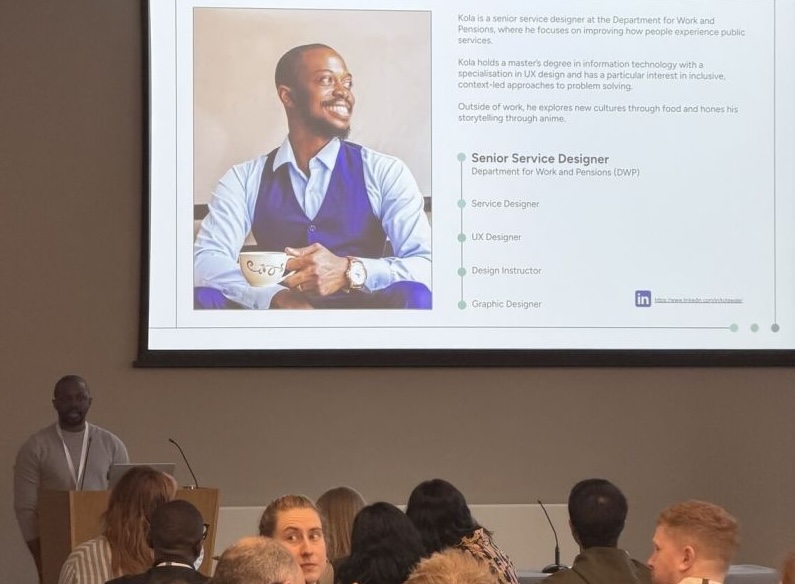
Kola‘s talk was really good and well delivered. The room was full and more seats had to be brought in. He starts with 3 stories which are funny, but also nicely bringing to light the cultural differences which might confuse people in the way they experience your service. He then presented a framework he uses to work with assumptions. He shared this on this website: Designing with assumptions using a hypothesis-driven approach to service design in complex systems.
Reflection to action: your way forward
In this session Laura Dalrymple gave some practical tips to understand when and how to change at work. With some simple questions like:
- How far did you play to your strengths yesterday?
- How far did you feel you mattered?
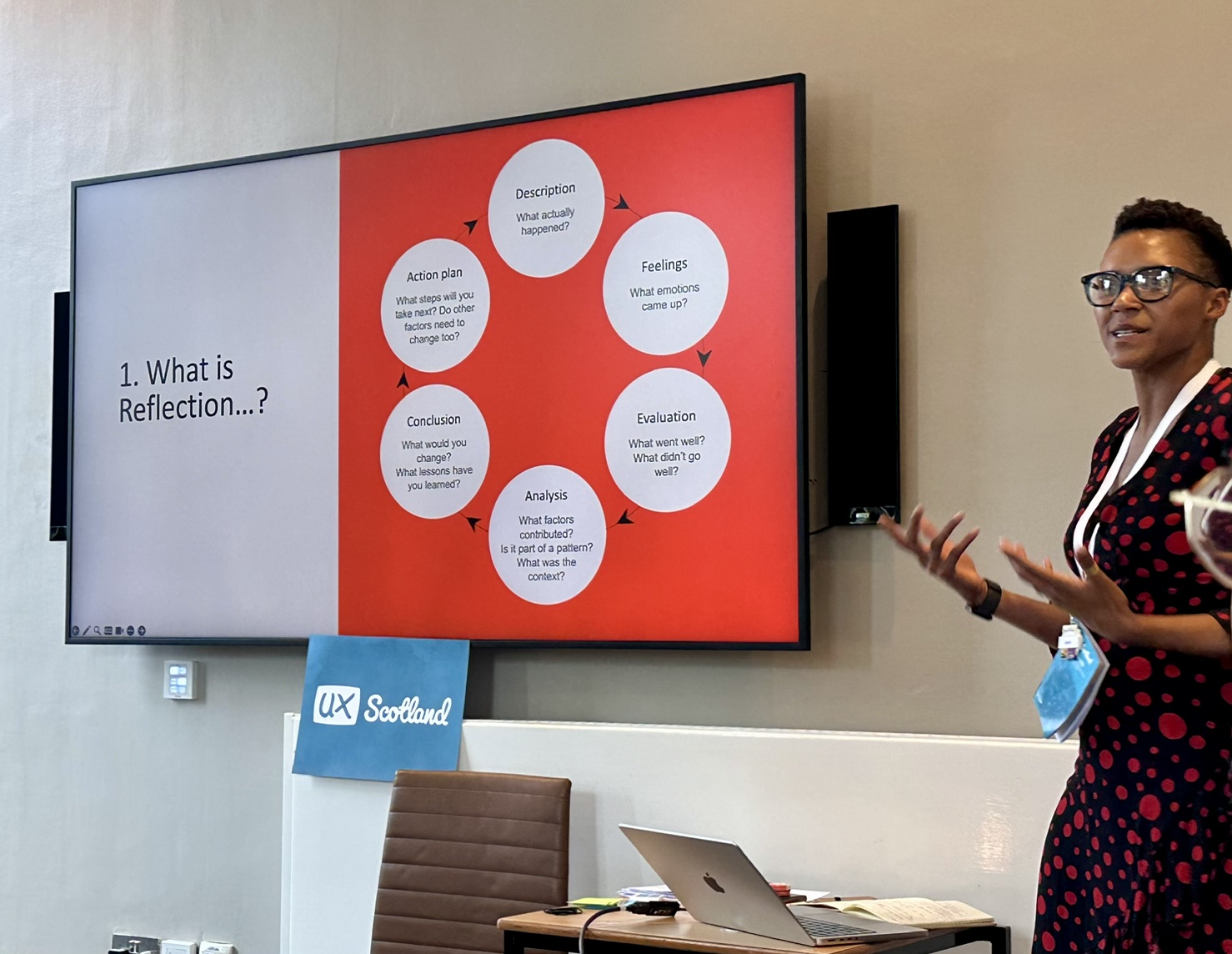
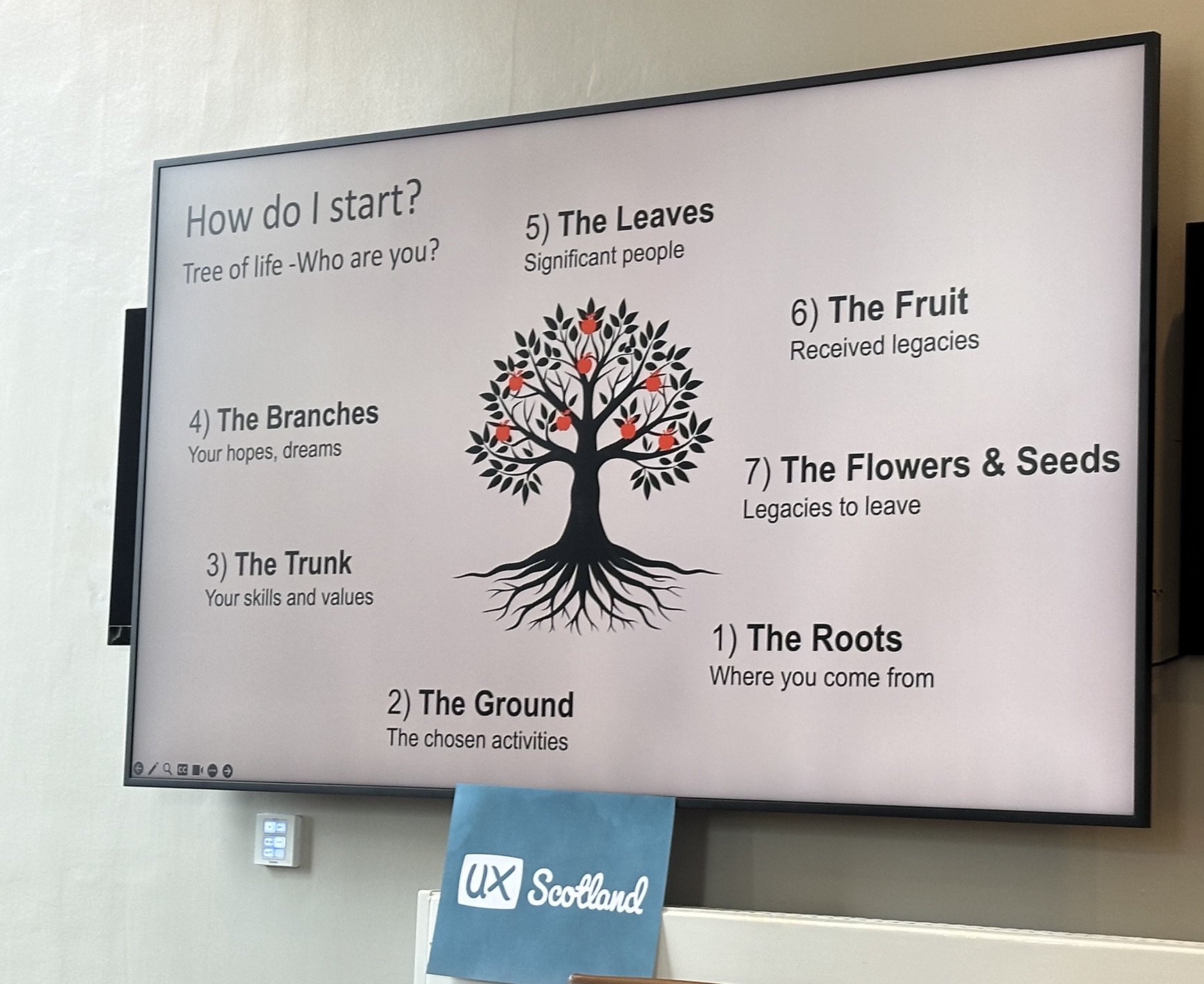
She explained the ‘tree of life’ which can support your reflection, and presented the Johari window (for example on Wikipedia), and the concept of Ikigai.
- the roots, where you come from
- the ground, the chosen activities
- the trunk: your skills and values
- the branches: your hopes and dream
- the leaves: significant people
- the fruits: received legacies
- the flowers and seeds: legacies to leave
There was an additional point about the ‘compost’ = what we are ready to let go of.
One of the advice she gave at the end was to ask for feedback from your colleagues. I asked if she could give some tips around this, because it’s something I find difficult in the UK. In France if you ask for feedback, you will likely get very honest feedback, whereas in the UK, you’re more likely get polite feedback where you need to guess and read behind the lines what they might mean by that, which is not very useful. Another attendee told me they were experiencing the same thing being Italian in the UK.
Laura’s answer was to be very specific with what we wanted feedback on, and to ask people we valued, as well as offering to provide feedback as way as a 2 ways thing.
Other sessions
I’ve also enjoyed Christian Richards‘ tall: Steel-toed boots in the boardroom: designing factory floor solutions that stick which was a different UX context.
Miriam Vaswani‘s workshop ‘Make trauma-informed design part of your style guide‘ was nice too, and gave me ideas which might be useful in my work context. She took 3 examples of situations which we worked on in small groups. She will share her slides later so will add them here.
Transforming probation services: prototype to pilot in 6 weeks
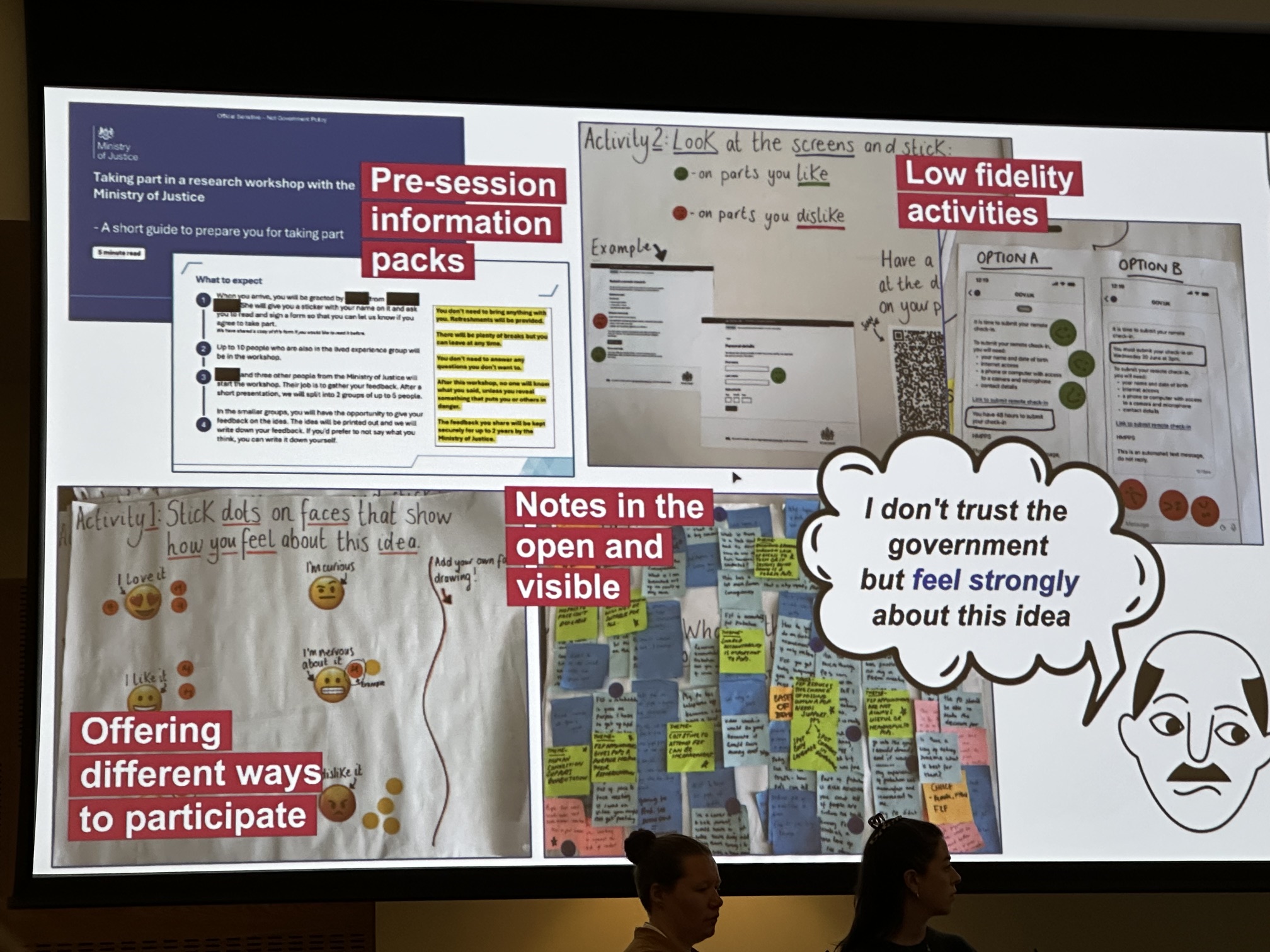
This session by Keara Drumm, Emma Sutcliffe-Regan and Carolina Pizatto was very well presented and engaging. I like sessions with more than one speaker. They had a good dynamic between them. I hope they will share their slides. I took some photos.
Here are their 10 principles:
- Start with users
- Adapt the research to the individual, not the other way around
- Learn and solve problems together, continuously
- Bring every discipline early
- Respect expertise, with blurred boundaries
- Build only what matters now
- Take smart, informed risks
- Release to learn, not to be perfect
- Document just enough
- Take pride in progress, keep going
My session
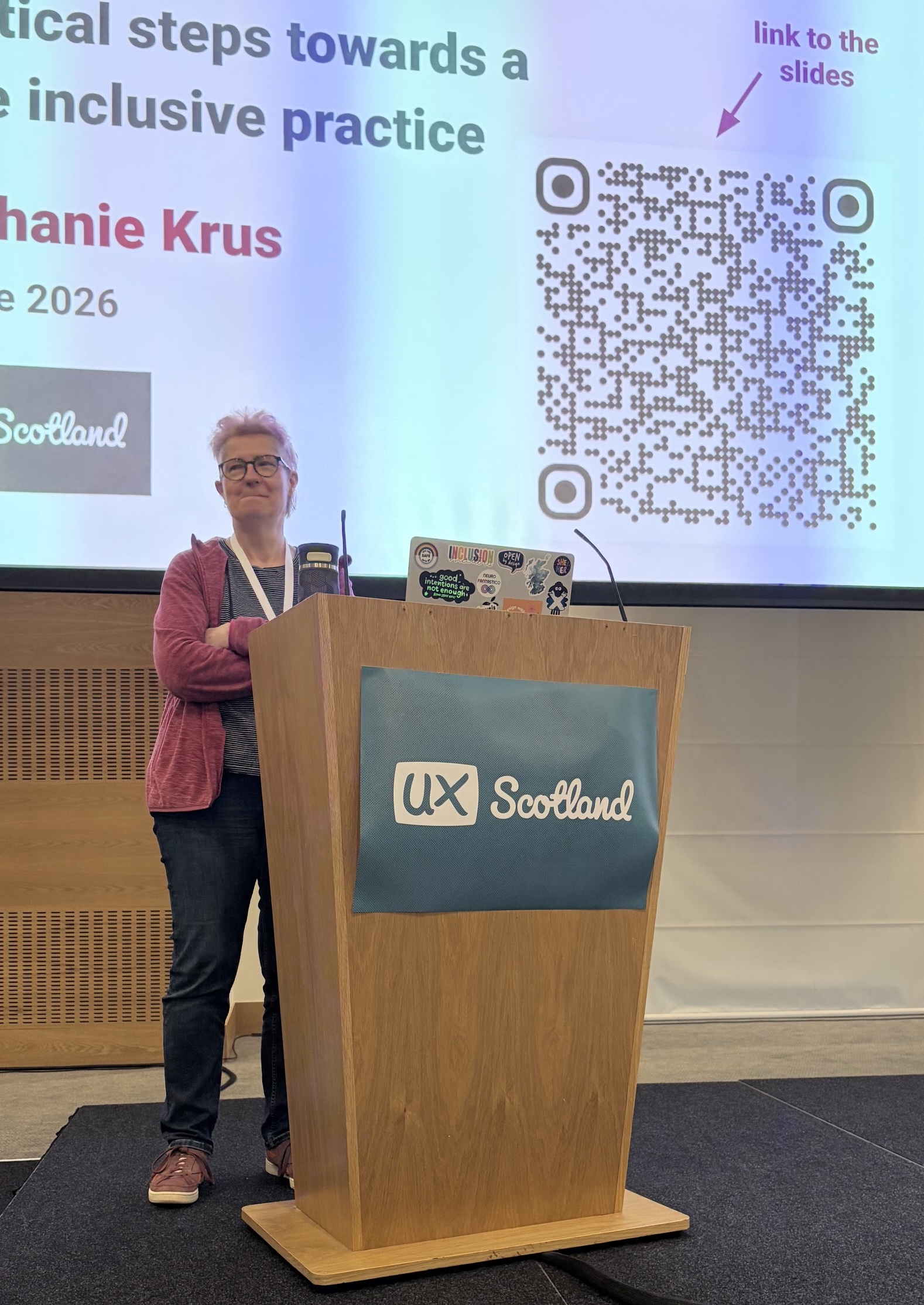
I’ve enjoyed delivering it, and I had good questions at the end. I’ve shared the slides in various formats – Practical steps toward a more inclusive practice.
I’m not getting as much from the sessions as before
Before writing this post, I looked back at the summary I made from the first time I attended UX Scotland in 2019. It was my first UX conference. At the time, it was over 3 days (not 2), at Dynamic Earth and I was relatively new to design. I was paying for my ticket so was really trying to see as many talks as I could, whereas this year I had a ‘speaker ticket’ so I sometime didn’t attend any of the sessions available and gave myself a break.
Less material and insights shared
I think there was an associated Slack space in 2019, and I was getting a lot of slide decks shared by the speakers whether I had attended their talk or not. People were sharing their photos and reflections on social media which was also another source of info for me. These days, there is no slack space, I’ve left most social media. It’s only LinkedIn where I can find this and not a lot is shared there. As far as I know, only one keynote shared their slides. More speakers might do it soon (?), but once the event is over, there is not much left. The talks were not recorded. More attendees might write about their reflections, in that case I’ll add a link to this post.
This is why I’ve tried to share a few other things in this post so people can still find some resources to learn more if they want.
I’m in different place in my career
In 2019, I was still pretty new to design, and I wasn’t sure where my career would take me, so I was still learning a lot, and was attending sessions about many different things that might become useful at some point. I was still trying to understand the lay of the design land. Now, I’m pretty happy where I am, I know there are things I’ll probably never do, and that’s ok, so my interests are not as wide as they used to be.
I’m getting old
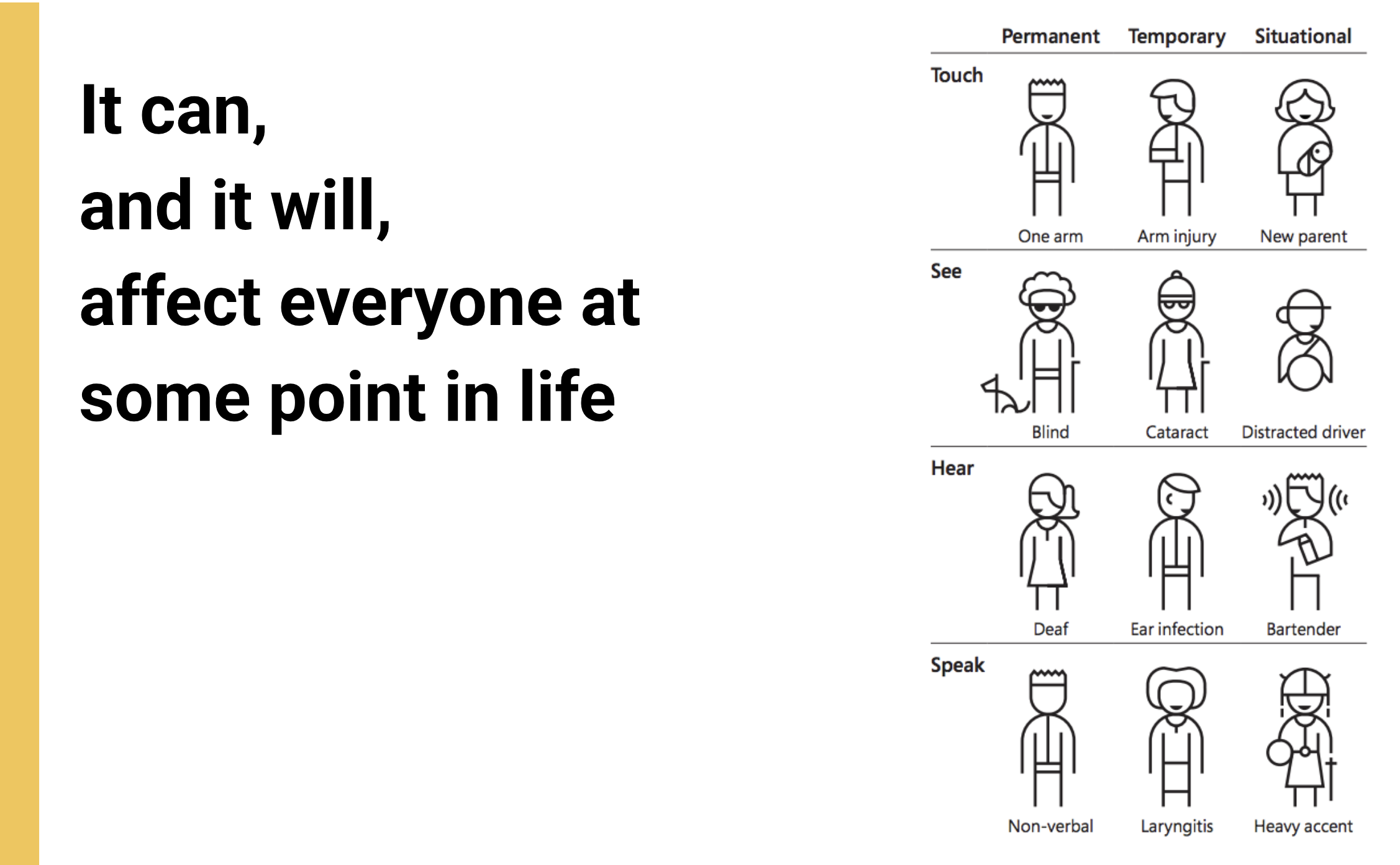
I think this post might start to be depressing ahahaha! but it’s true. I’m at a stage where I can identify with some of the situational disability part of the Microsoft Inclusive Design Toolkit which I used to share in presentations like on this slide stating “It can, and it will, affect everyone at the some point in life”. I’m like the bartender on the illustration and do not always hear well in a noisy environment or like the new parent with only one arm available: between my drink, my phone and bag, I often struggle to take notes during sessions unless I have a table so I’ve given up taking notes most of the time.
When I deliver a talk, I have glasses which allow me to see my notes, but the audience is blurry so I switch glasses at the end of the talk to answer questions from the audience. Even with the right glasses, I don’t always see well the slides during people’s presentations. It’s the same whenever I’m at the office.
All this is affecting my experience of the conference too.
New badge
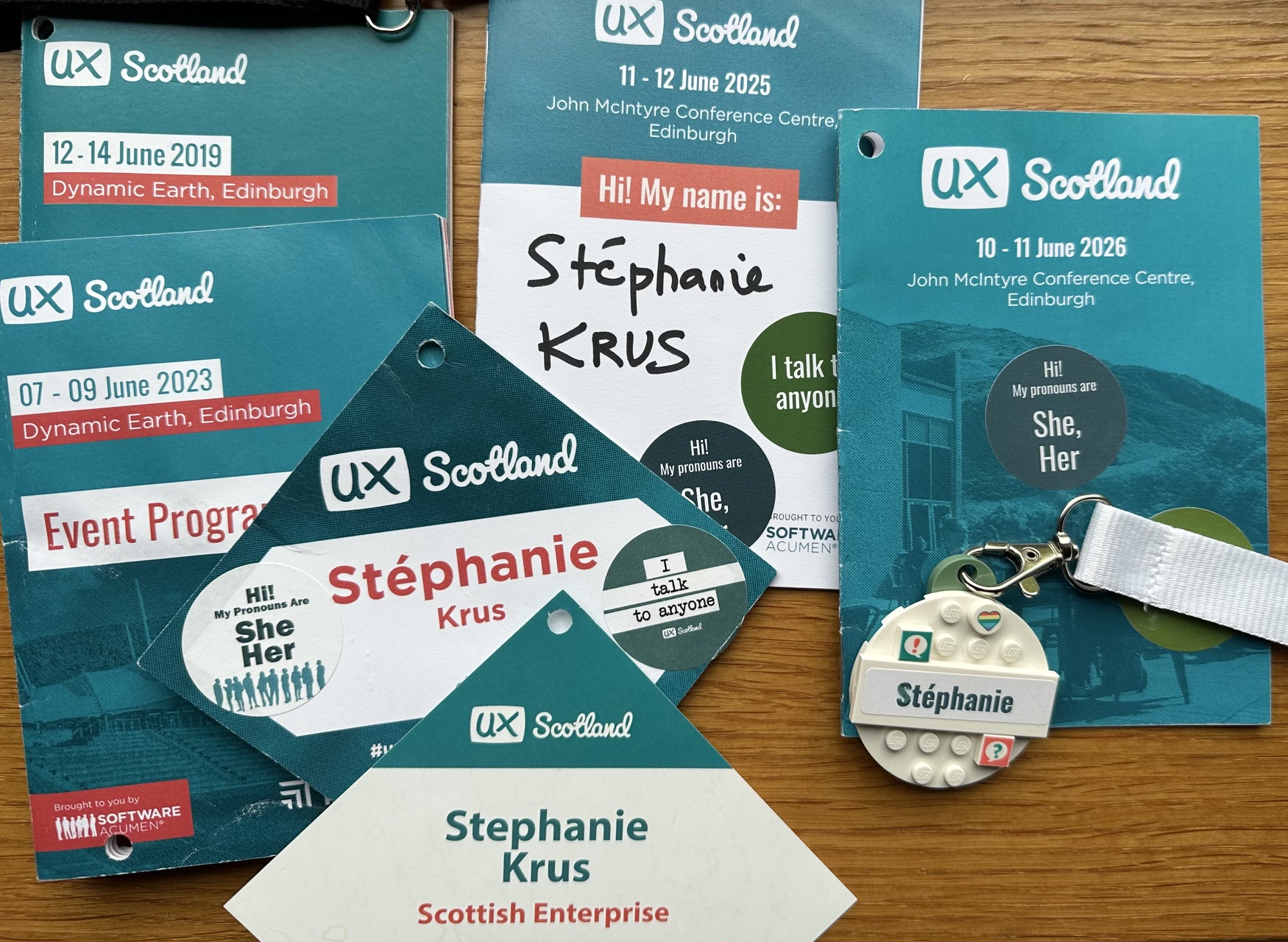
This year the organisers were trying a new badge with Lego. You get a base with your name on it and you can add things to it, from little bowls full of tiny lego pieces. Many people enjoyed this. I didn’t. It was hard for me to manipulate the small pieces (I have sensations issues with my hands) and then I was struggling to read some of the writing on them sometimes. It was also harder for me to read people’s name from their badge because of the font used and its size. It was only their first name, so there are many people I’ve been chatting to but I’m not sure who they are because asking for a name is one thing but asking for a surname feels a bit much? Like I’m the conference police? I did appreciate that Allison made sure I had my accent on the ‘e’ though 😉
I know many did like it though, so maybe we could have different versions, I don’t know.
The people
These days, I mostly enjoy the people. Reconnecting with some people I’ve not seen for a while. Meeting new people, and spending time with some colleagues. We often don’t have time to chat and to get to know each other at work or during Service Design community days, so the conferences are actually a good place for this.
Next conference
Next conference will be SDinGOV in September. I have my speaker ticket and Kola too. But this time I’m not speaking about inclusion and by myself. I’ll be with Charlie Kleboe-Rogers and Bahana Saikia with a 2 hour workshop: Mapping your career journey – what’s next for you? I’m not sure the world is ready for our trio but beware, we’re coming 😉